
Key Differences of Insulation Materials
Key Differences Between Spray Foam, Fiberglass, Rock Wool, and Blown-In Cellulose Insulation
Choosing the right insulation is one of the most important decisions you can make to improve your home’s comfort, energy efficiency, and long-term value. With several insulation options available, understanding the strengths and weaknesses of each material can help you make the best choice for your home and budget.
Spray Foam Insulation
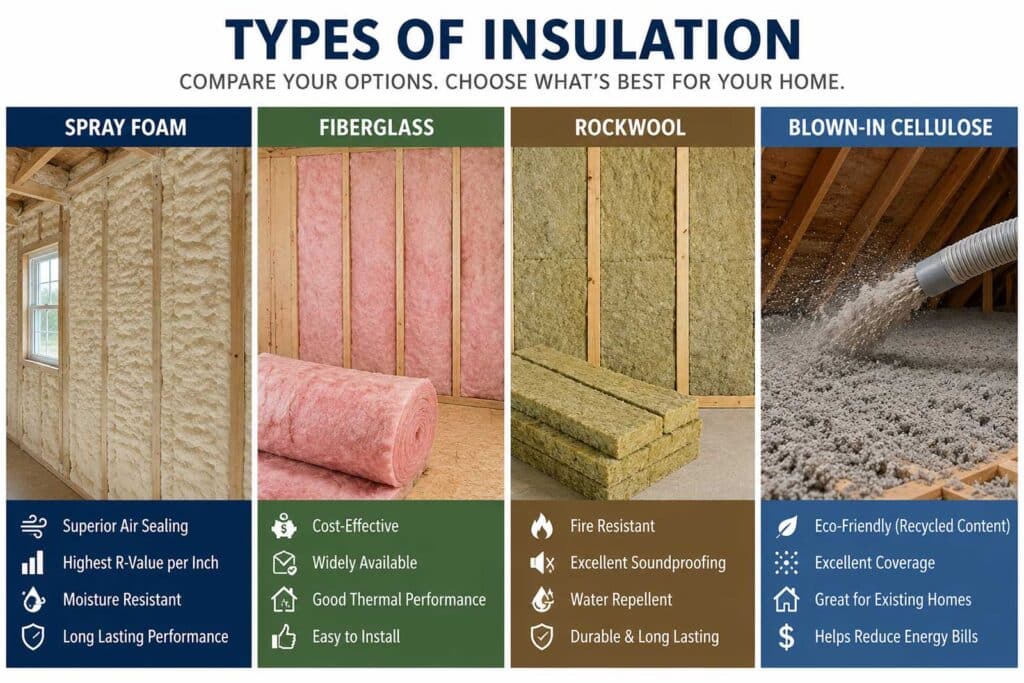
Spray foam insulation is considered the premium insulation solution for homeowners seeking maximum energy efficiency. Applied as a liquid that expands into a solid foam, it fills gaps, cracks, and hard-to-reach areas to create an airtight seal.
Advantages
- Superior air sealing performance
- Highest energy efficiency
- Excellent moisture resistance
- Reduces drafts and outside noise
- Long lifespan with little maintenance
- Helps strengthen wall structures
Best Applications
- Attics
- Crawl spaces
- Rim joists
- Basements
- New construction
- Pole barns and garages
Considerations
Spray foam has a higher initial installation cost but typically delivers the greatest long-term energy savings through reduced heating and cooling expenses.
Fiberglass Insulation
Fiberglass insulation is one of the most widely used insulation materials in residential construction. Available in batts or rolls, it offers reliable thermal performance at an affordable price.
Advantages
- Budget-friendly
- Easy to install
- Good thermal performance
- Widely available
- Non-combustible
Best Applications
- Exterior walls
- Attics
- Floors
- Between floor joists
Considerations
Fiberglass does not stop air movement as effectively as spray foam, making proper air sealing essential for maximum efficiency.
Rock Wool (Mineral Wool) Insulation
Rock wool insulation is manufactured from natural volcanic rock and recycled materials. It provides excellent thermal performance while also offering exceptional fire resistance and soundproofing.
Advantages
- Outstanding fire resistance
- Superior sound reduction
- Water resistant
- Mold resistant
- Excellent durability
- Higher density than fiberglass
Best Applications
- Interior walls
- Exterior walls
- Basement walls
- Multi-family housing
- Soundproofing projects
Considerations
Rock wool generally costs more than fiberglass but offers additional benefits in fire protection and noise reduction.
Blown-In Cellulose Insulation
Blown-in cellulose insulation is made from recycled paper products treated with fire retardants. It is ideal for upgrading existing homes because it fills irregular spaces and creates dense coverage.
Advantages
- Eco-friendly recycled material
- Excellent thermal performance
- Great for retrofit projects
- Good sound dampening
- Cost-effective
- Fills gaps and voids better than batt insulation
Best Applications
- Attic upgrades
- Existing walls
- Hard-to-access spaces
- Home energy retrofits
Considerations
Proper air sealing should always be completed before installing blown-in cellulose to maximize energy savings and prevent air leakage.
Side-by-Side Comparison
| Feature | Spray Foam | Fiberglass | Rock Wool | Blown-In Cellulose |
|---|---|---|---|---|
| Energy Efficiency | ★★★★★ | ★★★☆☆ | ★★★★☆ | ★★★★☆ |
| Air Sealing | Excellent | Poor | Fair | Good |
| Sound Reduction | Excellent | Good | Excellent | Very Good |
| Fire Resistance | Good | Excellent | Outstanding | Good |
| Moisture Resistance | Excellent | Fair | Excellent | Fair |
| Installation Cost | $$$$ | $ | $$ | $$ |
| Long-Term Savings | Excellent | Good | Very Good | Very Good |
Which Insulation Is Right for Your Home?
The best insulation depends on your home’s construction, your budget, and your long-term goals. Homeowners looking for maximum energy savings often choose spray foam, while fiberglass remains an economical solution for many applications. Rock wool excels where fire resistance and sound control are priorities, and blown-in cellulose offers exceptional performance for attic upgrades and older homes.
Working with an experienced insulation contractor can help ensure the right product is selected for each area of your home, maximizing comfort, energy efficiency, and return on investment.
Schedule Your Free Insulation Consultation
Whether you’re building a new home, upgrading an attic, finishing a basement, or improving your crawl space, Infinity Energy Solutions can recommend the ideal insulation solution for your needs. Contact our team today to learn how professional insulation can lower your energy bills and improve your home’s comfort for years to come.